Engaging Patients In Infection Prevention | SMART Toolkit

Patients have a role in preventing HAIs while hospitalized and an interest in strengthening HAI prevention efforts. Patients should be empowered to advocate for their safety and supported when they speak up about their safety.
While many hospitals educate patients on general infection prevention, such as relaying the importance of hand hygiene, they don't always provide patient education that specifically addresses the prevention of CAUTIs and CLABSIs.
Engaging patients in infection prevention can help prevent HAIs such as CAUTIs and CLABSIs.
Your hospital may be missing key components of patient education for the prevention of CAUTIs and CLABSIs.
Case Study:
Recognizing Why Patient Engagement Matters in the Prevention of HAIs
This case study demonstrates how it may be easy to overlook the role of patient education in the prevention of HAIs. This example can inspire you to look at your own hospital, department, or unit and ask - are we providing patients all the education they need to include them as partners to help prevent CAUTIs and CLABSIs?
Barbara has been in the hospital for a week now and she is looking forward to going home. As a part of her medical treatment she received a central line to deliver medications for her condition. Barbara was happy to have the central line placed, because it also made drawing blood easier - something she's still getting used to after her kidney function began to decline this past year.
When Barbara's son, Mark, would visit her in the hospital he would ask her questions about how she was feeling and how her treatment was progressing. Barbara had mentioned to her son that the doctors inserted a central line and Mark noticed on this visit that his mother kept touching the central line catheters on her chest.
"Should you be messing with that, mom?" asked Mark.
"Oh, I'm not hurting anything," Barbara responded.
"Maybe at least wash your hands before you touch it?" Mark questioned.
Barbara explained, "Don't worry, the nurses clean it. Plus, they never told me to wash my hands before I touch my central line. While general education about hand hygiene is important, patients and family members should also be aware of proper hand hygiene practice when touching or caring for their devices. They only reminded me to wash my hands before I eat. So, it can't be that important."
"Well, I'm glad to hear the nurses keep it clean," Mark responded. He could tell his mother was getting tired, so he decided to leave for the day and promised his mother he would be back to see her tomorrow.
The next day was a busy day for Barbara. The nurses and doctors were coming in and out of her room constantly to check her vitals, run tests, and discuss her treatment. Even though she was laying in her hospital bed all day, she felt she didn't have a moment to rest. For what felt like the hundredth time that day, the nurse came into her room and told Barbara it was time for her chlorhexidine gluconate (CHG) bath.
"Oh, can we skip that today? Patients should be educated about the importance of the consistent maintenance of their devices, especially as some patients will try to decline this care when they perceive it as an inconvenience. I'm so tired and those wipes make me feel so sticky. I'll be too uncomfortable to get any rest," Barbara said wearily.
The nurse thought for a second. He knew that the CHG bath was important to prevent infection of Barbara's central line, but Barbara did seem awfully tired. He thought she deserved a break after her difficult day.
"Okay Barbara, you're the boss!" the nurse said cheerily. "Get some rest and we'll take care of this later." As he left the room, the nurse reasoned to himself, "I'm sure the next shift will take care of her CHG bath, they won't let it slide."
The next day was less stressful for Barbara, despite the fact that it was the day for her blood draws. In fact, Barbara didn't mind her blood draws so much now that she had her central line - she didn't have to be poked with needles, which made the experience easier.
That morning a nurse came in and reviewed Barbara's information in the EHR. "Hmm, looks like we don't really need this central line anymore," the nurse said. "We should think about taking it out."
"Oh, really?" Barbara responded. "You know, I don't really mind it and having my blood drawn is so much less painful now that I have it. Can we just leave it in?" It is important patients know that removing a device when it is no longer needed is in their best interest to avoid an HAI. This is particularly important when a patient perceives that keeping their devices is a convenience.
The nurse paused before answering. She knew that every day they left the central line in, Barbara's chances of getting an infection increased. However, she was sympathetic to Barbara's discomfort and didn't want to cause her more pain for her blood tests. The nurse thought to herself, "The central line is already in, might as well leave it for today." She reasoned, "Surely they'll check at the next shift and remove the central line then."
Okay," the nurse responded to Barbara. "We'll leave the central line in and make everyone's life a little easier today."
In the hospital unit that Barbara was staying in, the nurses always scrubbed the hub of her central line catheter for what felt like the longest time before they accessed it. She didn't understand why they had to spend so much time cleaning it, but she assumed it must be important. Barbara thought to herself, "Why else would they spend so much time on it? Nurses are busy. If they are taking the time to do this, it must be the right way."
During the blood draw that day, however, Barbara noticed that the nurse just quickly wiped off the hub of her central line catheter before she moved on to the rest of the preparations for the procedure. "That's different than what has happened before," Barbara thought to herself. Barbara was just about to speak up to ask why this was different, but then reconsidered. Empowering patients to speak up for their safety enables them to be partners in care. For the prevention of CAUTIs and CLABSIs, patients should be encouraged to speak up about hand hygiene, maintenance of their devices, and the removal of their devices.Barbara reasoned to herself, "I'm sure this nurse knows what they are doing, things just must be different this time. Plus, what do I know? I'm not a doctor. The nurses are professionals, they will do what's best for me." The blood draw procedure was painless, "Thanks to my central line," Barbara thought, and she settled back to await her daily visit from her son.
The next day, Barbara wasn't feeling very well. She felt especially tired and the area around her central line was very uncomfortable. The nurse noticed Barbara was not herself and asked how she was feeling. When Barbara mentioned that her skin around her central line was particularly tender the nurse took a closer look and found the area to be red and warm. The nurse knew what she had to do and ordered a blood culture to test for an infection. Sure enough, it came back positive and Barbara was diagnosed with a CLABSI. The nurse explained to Barbara that she had developed an infection because of her central line and she would need to stay in the hospital longer so that the infection could be treated.
Barbara was shocked, "I never knew there was a risk of infection. I didn't know that the longer I had the central line, the more I was at risk. I wish they would have told me when they put the central line in. I would have insisted they remove it sooner." Patients should be informed that their device creates a risk of infection and that this risk increases the longer the device is in place. When patients are aware of their infection risks, and what they can do to minimize those risks, they can participate in the prevention of HAIs.
When Barbara told Mark about her infection he was upset. When the nurse tried to console him, he said sadly, "I wish they would talk to patients and families about this. We want to know what's going on and help prevent these situations."
Barbara was looking forward to going home, but with her CLABSI, she now had to wait a bit longer.


Delivering Patient Education for Infection Prevention
| The Five Rights of Clinical Decision Support | The Five Rights of Patient Infection Prevention |
|---|---|
| The Right Information | The Right Educational Information |
| To The Right Person | To The Right Patient or Caregiver |
| In The Right Intervention Format | In The Right Format |
| Through The Right Channel | Through The Right Channel |
| At The Right Time In The Workflow | At The Right Time In The Patient Journey |
THE FIVE RIGHTS
When developing and tailoring patient education to reduce infection, it is important to consider the right information provided to the right person in the right format through the right channel and the right time. This borrows from the idea of The Five Rights, for example the Five Rights model for Clinical Decision Support, that can be applied to how an organization addresses patient education.
The Right Educational Information
Organizations may have Infection Prevention teams that can work to develop or adapt context-appropriate content to present data and stories in a manner that can impact patient behavior.
Click on each image below to learn more.


Patients may be unaware that Foley catheters and central lines pose a risk of infection and that removing these devices as soon they are no longer medically necessary minimizes this risk. This is particularly important as catheters or central lines can be viewed as a convenience and left in longer than necessary.
These three points can be shared to convey risk to the patient:
- Having a Foley catheter or central line puts you at risk of developing an HAI…
- …and an HAI will require additional medical treatment…
- …therefore, the sooner these devices are removed, the less your risk for prolonged time in the hospital.
Hospitals should consistently send the message that everyone's hand hygiene is critical for the prevention of CAUTIs and CLABSIs by:
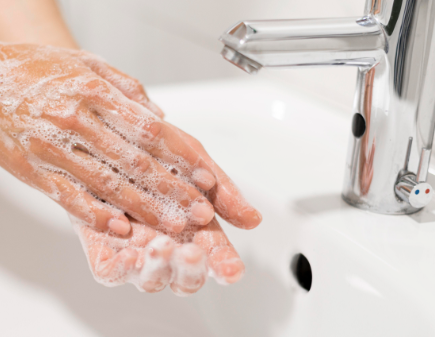
- Educating patients and their visitors about the importance of hand washing before touching a Foley catheter or central line.
- Emphasizing the need for patients to wash their hands before using Foley catheter wipes or chlorhexidine gluconate (CHG) wipes for their central line.
- Reiterating the need for hand hygiene for patients who leave the hospital with their device.
Some patients may decline care of their Foley catheter or central lines. In our interviews, providers noted that some patients do not like the CHG baths for their central line because it feels sticky on their skin. When patients don't understand the importance of care and hygiene for infection prevention, they may be less likely to agree to adopt them.
Make sure patients are aware of the importance of these procedures by:
- Educating patients about the critical role of maintenance care in infection prevention for their Foley catheter or central line.
- Involving multiple roles in patient education (e.g., nurses, physicians, Infection Preventionists) to show a consistent message about the necessity of Foley catheter and central line care across the care team.
- Bring the patient into the decision making process about when Foley catheter and central line care happens. Patients frequently have little control over their healthcare experience. For example, being awoken to receive care. Allowing patients to identify when Foley catheter and central line care occurs can make them feel in greater control over their hospital experience.
Patients may not realize they have the right to speak up for their safety in the hospital. Giving patients the permission and support to speak up can make them partners with their care team to prevent infections.
Hospitals frequently encourage patients to speak up about their care if they have concerns about their safety. One example of this is when they don't see their care providers perform appropriate hand hygiene. Speaking up can be extended to encourage patients to speak up about their safety related to their Foley catheter or central line.
Care providers should reassure patients that it is appropriate to speak up for their safety. Specifically, the care team can:
- Equip patients with the words to use when their care providers, family members, or visitors are not performing appropriate hand hygiene, especially before someone touches a patient or their devices. Preparing patients to speak up by giving them scripts like - "Did I miss seeing you wash your hands?" - can make them more comfortable in raising their concerns.
- Educate patients on what to expect about the care of their devices while in the hospital and encourage them to speak up when that care is not performed as expected. For example, patients should know that their care providers should scrub the hub for 15 seconds before accessing their central line. Providers can encourage patient engagement in their device care by asking patients to count along with them as they scrub the hub.
- Encourage patients to ask their care providers every day if they still need their Foley catheter or central line.
Additional Resources & Tools
The CDC, among others, offers patient focused materials as a handout, but organizations frequently draw on these documents to develop their own branded content:
- CLABSI Resources for Patients - Centers for Disease Control and Prevention
- CAUTI Resources for Patients - Centers for Disease Control and Prevention
Additionally the Association for Professionals in Infection Control and Epidemiology offers similar guidance and guidelines:

The Right Person
Patients
Educating and empowering patients can allow them to contribute to the safety of their care and has been utilized successfully to address patient safety issues such as medical errors and care provider hand hygiene. When educated about the risk of HAIs, and the actions they can take to reduce these risks, patients can also contribute to the prevention of these infections.
Family Members / Caregivers
In the hospital setting, not all patients may be feeling well enough to advocate for themselves. In this case, educating a patient's family member or caregiver can allow them to act on behalf of the patient. Educating the family or caregiver is also important when they may be closely involved in the care of the patient, for example post-discharge.
The Right Format
Because patients and family members may have different preferences for how they consume information, or may need a different format in different instances, it is important to offer education in a variety of formats. Different formats may also be better suited to deliver different types of messages.
Paper Resources (e.g., booklets, packets, handouts)
The value of paper resources is that patients do not need an electronic device to access them and can make notes directly on paper. The length and format of these resources varies depending on the intent. For example, a one-page handout or infographic is quite different from a 16-page handbook or a 45-page packet. Understanding these approaches can help ensure that the right message is being heard.
Handouts are 1-2 pages and can tell a focused story. They can describe:
- why devices are used
- the risks that Foley catheters or central lines create for infection and its consequence to the patient
- the steps the patient, caregiver, and care team can take to keep the patient safe
- what to expect from care team behaviors and how to speak up in the care context
- discharge instructions
This kind of information can be quickly conveyed, is not complicated, and can be used to ensure that patients and their caregivers know what to expect and know when to speak up.
Booklets and information packets are generally longer and can serve as a reference guide for patients. The longer format allows for more in-depth discussion of complex issues, the inclusion of greater detail, and can prompt the patient to think about the entire care process. For instance, handbooks provided upon admission can describe general infection prevention practices and their role in ensuring patient safety in the hospital.
Posted Resources (posters and digital signage)
Signs, posted flyers, and electronic communication methods such as tv screens, tablet home screens, or screensavers can be used to remind patients about infection prevention practices.
For example, resources posted in patient rooms can be used to remind patients about the maintenance care of their devices. For instance, a sign on each patient's bathroom door can ask patients "Do you have a central line? Did you bathe with CHG?" and include an explanation of the importance of this care for infection prevention. This may be particularly helpful for those situations in which patients themselves are performing the maintenance care of their device. Other signs that say "Scrub the Hub" can help remind patients about the appropriate care to expect for their central lines when the maintenance care is being performed by their care provider.
Flyers posted in more public locations, such as outside patient rooms, hallways, or elevators, can inform patients and their caregivers about infection prevention policies that apply to all patients. For example, posted flyers can convey the importance of device removal and can reinforce that this is a policy for all patients, which can address resistance to device removal that may occur if patients see their device as a convenience.
Posters can also be used as a friendly reminder to patients that they are encouraged to speak up as partners in infection prevention. Providing this message in a way that is visible to everyone (both patients and staff) helps create an environment in which the patient can feel comfortable and confident speaking up for their safety.
Electronic Resources (e.g., patient portals, internet)
To ensure that patients who want information about caring for themselves and preventing infection have easy access to the most accurate material, organizations can provide electronic resources to patients and their families. If the hospital does not provide such resources, patients may go looking for this information on their own. To ensure patients have the correct information, hospitals should provide resources that patients can easily access electronically.
Patient portals are an electronic source of information that patients can access during their hospital stay, through an inpatient portal, or outside of the hospital, through an outpatient portal. Including educational materials in these portals can allow patients easy access to information that is important to infection prevention during their hospitalization or after their discharge. Providing information through a patient portal ensures the patient will have continued access to these resources, unlike paper resources that can be easily misplaced. Patients may also find it convenient to have educational resources stored in the portal where they can also review other information pertinent to their health, such as test results, or perform tasks to manage their health care, such as sending messages to their care team.
For patients that may not have a patient portal, or for caregivers that do not have access to their family member's portal, it is valuable to also provide educational materials on the public hospital website. This information should be easy to locate using the hospital website's directory or search bar. Ensure patients and their caregivers know these resources are available by directing them to these websites.
Guidelines for patient education resources
To create resources that are easy to understand, they should be:
- Written at a 6th-grade reading level or lower
- Use plain language (i.e., avoid medical jargon when possible and explain medical terms when necessary)
- Use short sentences and paragraphs
- Use visuals (e.g., pictures, illustrations, infographics) instead of words when possible
The Right Channel

Care Providers
Nurses are often the ideal providers of patient education due to their proximity to patient care. As they interact with patients at the point of care, nurses have the opportunity to communicate and reinforce infection prevention education topics throughout a patient's hospital stay.
However, involving multiple roles in patient education (e.g., nurses and physicians) is important to convey a consistent message about infection prevention to the patient. For example, some patients may be more likely to accept maintenance of their device if it is reinforced by their physician in addition to their nurse.
Infection preventionists can also play a role in the delivery of patient education. As experts in infection prevention practices, they can provide expertise to help clarify and reinforce education topics. For example, the involvement of an infection preventionist may be helpful to convince a patient that their device should not be left in for convenience due to the risk of infection.
Verbal Discussions
All educational topics should be covered through verbal discussion with the patient, even when other resources (e.g., handouts, signs, patient portals) are provided. These discussions may be particularly impactful at the time of device insertion, during device maintenance, and during rounding.
These verbal discussions should not happen just once; discussion about these patient education topics should occur multiple times to reinforce their importance. It may be necessary to reiterate educational topics especially when patients resist recommended care (e.g., declining maintenance or removal of devices).
Verbal communication of education topics can be supplemented with the other resources listed above. For example, remind patients that information is available for them to review in their admission handbook or patient portal and point out to patients the posted signs visible to them that are meant to remind them about their role in infection prevention practices (e.g., performing hand hygiene, performing device maintenance, and speaking up when they have a safety concern).
At The Right Time In The Patient Journey
There are many opportunities to deliver patient education throughout a patient's hospital stay. Providing information at multiple times is important to reinforce these education topics.

At Admission
Booklets or packets provided upon admission can cover general infection prevention information (e.g., hand hygiene) as well as practices specific to the prevention of CAUTIs and CLABSIs (e.g., the role of CHG baths for device maintenance). These resources can make it clear to patients as soon as possible that they have a role in their safety in the hospital and that they can speak up about their concerns. This sets the tone that the hospital culture supports patient engagement, which can encourage patient's participation in infection prevention practices.
During Care
Patient education about the risk of CAUTIs and CLABSIs should be provided at the time of device insertion. Patients should also be informed that these devices will be removed as soon as possible to reduce the risk of developing these infections. When performing clinical care of Foley catheters and central lines, describe why you are performing this care and its importance for infection prevention.

In the Hospital
Take advantage of other opportunities to deliver patient education when patients and their care providers are present. For example, rounding at the bedside may already involve discussion between providers about the removal of devices. Include patients in these discussions by letting them know why devices should be removed as soon as possible to reduce the risk of developing a CAUTI or CLABSI. Bedside rounding is also an opportunity to encourage patients to speak up. Hearing this message from multidisciplinary roles during rounding may be particularly helpful to create an environment in which patients feel comfortable speaking up to all members of their care team.
At Discharge
If patients are discharged with their devices they should be provided education about what signs of infection they should look for and how to care for their device at home. This should include discussion about if the patient can take care of the devices themselves or if a caregiver will be taking care of the patient. If a caregiver will be involved in the care of the patient after discharge, be sure they also receive the education they need to properly care for the patient's device. Direct patients and their caregivers to additional education resources (e.g., discharge instructions, outpatient portal, hospital websites) that they can easily access outside of the hospital.

Resources for Patient Education about CAUTI and CLABSI prevention
Online Resources
-
CLABSI Resources for Patients - Centers for Disease Control and Prevention
https://www.cdc.gov/hai/bsi/clabsi-resources.html -
CAUTI Resources for Patients - Centers for Disease Control and Prevention
https://www.cdc.gov/hai/ca_uti/uti.html -
Resources for reducing CAUTIs - CatheterOut
https://www.catheterout.org/resources.html
Handouts
-
FAQs about CLABSIs - The Association for Professionals in Infection Control and Epidemiology
https://apic.org/resources/topic-specific-infection-prevention/central-line-associated-bloodstream-infections/ -
FAQs about CAUTIs - The Association for Professionals in Infection Control and Epidemiology
https://apic.org/resources/topic-specific-infection-prevention/catheter-associated-urinary-tract-infection/ -
What patients and family members need to know about the risks associated with urinary catheters - CatheterOut
https://www.catheterout.org/uploads/5/6/5/0/56503399/patient_brochure.pdf
Scripts
-
Script to address requests for urinary catheters - CatheterOut
https://www.catheterout.org/uploads/5/6/5/0/56503399/patient_and_family_script_final_1.pdf
Standardization of Infection Prevention Education for Patients
Encouraging patients to participate in their care to promote safety requires effectively engaging patients in infection prevention. Standardizing infection prevention education for patients has two primary benefits, in that it:
- creates a culture that establishes the patient's role in their care; and,
- empowers patients with the information they need to reduce infection risk.
Two touch points for the development of components of standardizing patient education and engagement strategies are:
Patient Facing Strategies
- Standardize The Education: Create standardized education materials for patients with a Foley catheter or central line and enforce an expectation of educating every patient with these devices.
- Standardize The Delivery: Establish clear expectations about who is responsible for educating the patient, when the education should occur, what resources and topics are included, and how the education should be documented.
Clinician Facing Strategies
- Normalize The Knowledge: All clinicians across the hospital should be aware of the strategies to engage patients in infection prevention.
- Standardize The Deployment: Ensure consistent patient engagement strategies occur across units. Patients may travel between units for different aspects of their care, but they should expect all units to be a united front on patient engagement. For example, if a patient is expected to count along with their nurse during the 15 seconds they "scrub the hub," this should occur regardless if they are transferred to a new unit within the hospital.
- Reinforce The Message: Make staff aware of procedures to escalate patient education, when necessary. This may be particularly important in situations where patients may refuse their infection prevention care (e.g., Foley catheter perineal care or central line CHG baths) and care providers need support to reinforce education to the patient. For example, let bedside nurses know who to go to enforce education - a charge nurse, nurse manager, physician, or leadership.
The EHR can serve to automate the assignment of patient education and to document that education was delivered. In planning to use the EHR to perform this function, organizations can:
- Develop order sets for the deployment of Foley catheters and central lines that automatically create an order/alert for patient education about the device.
- Create alerts for patient education when infection prevention procedures are declined by the patient (e.g., the patient declines the CHG bath for their central line). An alert, in this instance, can help nurses escalate to other care providers (e.g., charge nurse, nurse manager, physician, or leadership) the need for patient education.
- Ensure care providers know it is their responsibility to document patient education in the EHR.
PFACs In Support Of Infection Prevention
Many healthcare systems utilize Patient and Family Advisory Councils (PFACs) to obtain patient perspectives and feedback. Collaborating with PFACs to review educational materials and protocols can help to ensure infection prevention education is delivered in a way that patients and their families find useful and impactful. PFACs can:
- review website design
- review education materials
- help develop materials to respond to emerging issues that involve interaction between healthcare system and patients (i.e., Role of PFAC during COVID)
- help to refine the process of delivering education to make it more patient-centric
- facilitate the understanding of barriers patients may face to participating in infection prevention and elicit their opinions about how to overcome these challenges
Establishing PFACs
If your hospital does not have a PFAC, there are resources on the web to guide your organization through their implementation. Notably, when establishing PFACs, organizations should:
- Involve senior leadership in the discussion of the purpose and objectives of the Council. In these discussions, it can be important to note PFACs can increase patient engagement, improve the patient-centeredness of care, and change institutional culture. In establishing a PFAC, leadership may want to set expectations in terms of how Advisory Councils will be used to improve hospital practices.
- Establish or leverage Patient Experience Departments for overseeing PFACs including recruiting and training advisors and facilitating communication with the appropriate groups within the institution.
- Ensure that engagement with PFACs includes feedback about how their work matters. PFAC members want to understand the impact of their work. Hospitals should plan to provide regular feedback to members throughout projects and a summary of impact upon completion. PFACs work best when the hospital attends to the ongoing relationships with members by connecting occasionally outside of Council meetings. Some organizations send birthday cards or greetings for special occasions while others simply connect via phone call or email.
Considerations for recruiting patients and family members for Councils include:
There are many ways to recruit patients and family members to join a PFAC. The right members make a difference, as does ensuring that the membership is robust.
While Council members may have predefined terms, they may also leave the Council when they feel like their commitment is completed. A robust membership process will be needed to ensure that open spots are not left vacant for an extended period of time when existing members leave.
Some initiatives may require specific expertise or perspectives from Council members. For example, to inform infection prevention practices that prevent HAIs, recruit patients who were hospitalized and were at risk for these infections (e.g., who received an indwelling urinary catheter or central line as a part of their care).
Unit managers may have important insight into those patients who might function well as advisors because of the variety of patients and family members they interact with. Educate unit managers about what a PFAC is and what its role will be at your hospital, and provide a clear description of what to look for in potential advisors and appropriate processes to follow to suggest a patient for this role. The Agency for Healthcare Research and Quality provides a brochure advertising PFACs that can help managers understand the roles of advisors and how to recruit them. (https://www.ahrq.gov/).
Posters can describe the patient and family advisory Council and direct interested patients to ask their provider about this opportunity or call a Council representative. Maintaining an information website for the patient and family advisory Council can also provide a mechanism of self-referral by patients. Patients may also be referred to the Council by care providers either during their hospitalization or after their hospitalization in a follow-up visit.
For example, the majority of Council members may be over 65 years of age, as it can be harder to recruit younger patients (e.g., between ages of 18-50). Working with unit managers can help the recruitment of diverse Council members.
- When Council meetings can occur in person, provide explicit instructions about meeting locations and parking options.
- Choose meeting locations that are easy to find and accessible.
- Provide parking vouchers to meeting attendees.
-
When meetings must occur virtually, reach out to Council members to assess if they have the appropriate
resources to participate in this style of meeting.
- Do they have internet access?
- Do they have a device with which they can access the meeting?
- Do they understand how to access the virtual meeting?
- Use virtual meeting platforms that can accommodate multiple methods of participation (e.g., video or phone call).
Resources for the creation and use of PFACs:
There are a number of resources available to support the establishment of PFACs:
-
Agency for Healthcare Research and Quality (AHRQ): AHRQ provides resources to support patient engagement in
hospital quality and safety, including a PFAC implementation handbook
https://www.ahrq.gov/patient-safety/patients-families/engagingfamilies/strategy1/index.html -
Institute for Patient and Family Centered Care (IPFCC): IPFCC offers resources on the establishment and effective
use of PFACs to improve patient-centered care
https://www.ipfcc.org/ -
Beryl Institute: The Beryl Institute provides access to external resources and internal educational resources
about how PFACs can positively impact patient experience with their healthcare
https://www.theberylinstitute.org/page/PFAResources -
Patient-Centered Outcomes Research Institute (PCORI): PCORI offers information and resources about how PFACs can
impact patient-centered outcomes, including a toolkit for engaging PFACs in research
https://www.pcori.org/research-results/2015/building-knowledge-how-patient-family-advisory-councils-pfacs-engage-patient -
American Essential Hospitals: American Essential Hospitals provides a handbook with advice for creating and
sustaining PFACS
https://essentialhospitals.org/quality/a-blueprint-for-patient-advisory-boards/
Patient and Family Education Facilitator Guide

Facilitator Guide
Portable Document Format (PDF)
This assessment form is designed to help recognize how patient and family education about the prevention of CAUTIs and CLABSIs is currently being conducted in your hospital.


Facilitator Companion Presentation
PowerPoint Document (PPTX)
The objective of this presentation is to provide guidance about how to develop and deliver patient and family education to support HAI prevention.
Patient And Family Education Tools
Assessment Form
Portable Document Format (PDF)
This assessment form is designed to help recognize how patient and family education about the prevention of CAUTIs and CLABSIs is currently being conducted in your hospital.
Patient And Family Education Activities
Case Study: Recognizing Why Patient Engagement Matters in the Prevention of HAIs
Portable Document Format (PDF)
This case study demonstrates how it may be easy to overlook the role of patient education in the prevention of HAIs. This example can inspire you to look at your own hospital, department, or unit and ask: Are we providing patients all the education they need to include them as partners to help prevent CAUTIs and CLABSIs?
Needs Assessment Workshop: Communicators
Portable Document Format (PDF)
This worksheet is designed to help identify areas of improvement for patient and family education about the prevention of CAUTIs and CLABSIs and the resources and actions necessary to implement these improvements.